


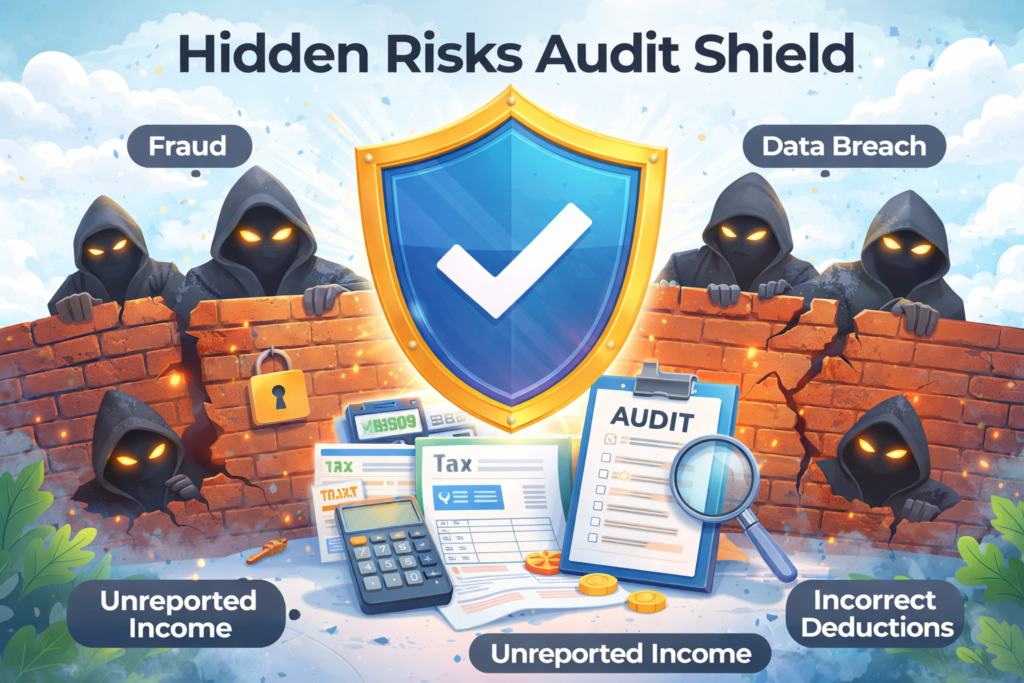
As your firm grows, protecting client data and financial processes becomes increasingly important.
However, many organisations overlook the hidden risks that the audit shield introduces. While audit shields promise protection and efficiency, they can also expose vulnerabilities if not carefully managed. Understanding these hidden risks is essential for maintaining compliance, protecting client trust, and avoiding costly penalties.
Audit shields are designed to streamline audit processes, automate documentation, and safeguard against regulatory mistakes. Yet, firms often rely on these systems without fully understanding potential gaps. For instance, a mid-sized accounting firm using an audit shield assumed its tax reporting was fully secure. When a state audit requested documentation, inconsistencies in automated records caused delays and raised questions from regulators.
At Next Source AI, we help firms identify these blind spots, ensuring that automation and compliance tools truly deliver protection without creating new risks.
Why Firms Overlook Hidden Risks
Many firms implement audit shields expecting seamless security and compliance. Unfortunately, blind trust in automation can create vulnerabilities. Firms may ignore gaps in system configurations, outdated software updates, or incomplete integrations.
Consider a freelance accounting firm that adopted an audit shield to manage multiple clients across states. The shield automated document storage but failed to update tax rules for certain jurisdictions. This oversight resulted in late filings and potential penalties.
Understanding the hidden risks audit shield presents ensures your firm avoids these scenarios. Without proactive measures, NextSourseAI firms face regulatory scrutiny, financial loss, and reputational damage.
Common Hidden Risks of Audit Shields
An effective audit shield offers security, but several audit risk management concerns remain:
Data Inaccuracy
Automated systems depend on input quality. Incorrect entries can propagate errors, causing inaccurate reports.
Incomplete Compliance Updates
Regulatory changes may not be reflected immediately. Firms relying solely on automation risk noncompliance.
Overconfidence in Automation
Blind trust in software reduces manual oversight, increasing the chance of missed errors or omissions.
Integration Gaps
Audit shields may not fully integrate with all accounting or tax platforms, creating blind spots in records.
Limited Human Oversight
Automation cannot replace expert review. Without periodic checks, errors can go unnoticed until an audit occurs.
For example, a regional tax consultancy used an audit shield but neglected manual reconciliations. During an IRS review, missing adjustments caused reporting discrepancies. The firm faced unnecessary scrutiny and delays in resolution.
Real-Life Impacts on Firms
Understanding hidden risks audit shield reveals how unaddressed vulnerabilities affect firms in practice.
One accounting firm relied entirely on its shield for quarterly tax submissions. They assumed the system automatically flagged missing client documents. During an unexpected IRS audit, they discovered gaps in supporting records, forcing staff to reconstruct months of transactions manually. This delay exposed the firm to fines and eroded client trust.
Another firm experienced similar issues when an automated compliance tool misclassified certain client deductions. Without human review, errors persisted until a state audit flagged discrepancies. Both examples highlight the critical importance of balancing automation with oversight.
Actionable Strategies to Mitigate Risks
Firms can proactively address hidden risks audit shield by adopting several key strategies:
1. Implement Regular System Audits
Periodic evaluations of your audit shield reveal inaccuracies, outdated rules, or integration gaps.
2. Maintain Human Oversight
Automated tools enhance efficiency but cannot replace expert review. Cross-check records monthly to catch anomalies.
3. Update Compliance Rules
Ensure your shield reflects the latest federal and state regulations. Automation must align with evolving tax laws.
4. Secure Data Access
Audit shields store sensitive client data. Limit access, enforce strong passwords, and monitor user activity.
5. Integrate with Accounting Systems
Verify full integration with your accounting and tax platforms. Proper synchronisation prevents data loss or duplication.
For instance, a consultancy working with Next Source AI automated client record management while conducting monthly manual reviews. This combination reduced errors by 75% and maintained complete compliance readiness.
Leveraging Compliance Automation Tools
Modern compliance automation tools play a crucial role in reducing hidden risks while enhancing productivity. Features like real-time error detection, automatic updates for tax codes, and centralised document storage improve accuracy.
Firms using Next Source AI benefit from AI-driven dashboards that monitor financial processes, track inconsistencies, and provide actionable insights. These tools complement audit shields, filling gaps that may otherwise remain unnoticed.
Automation should not be treated as a “set and forget” solution. Instead, it must integrate with firm processes and periodic human verification to achieve maximum effectiveness.
The Benefits of Addressing Hidden Risks
By proactively addressing the hidden risks audit shield, your firm gains tangible advantages:
Reduced Audit Exposure
Regular checks and updates minimise the chance of regulatory penalties.
Improved Client Confidence
Clients trust firms that demonstrate rigorous compliance practices and accurate reporting.
Enhanced Operational Efficiency
Automation combined with human oversight streamlines workflows and reduces manual errors.
Scalable Processes
Properly managed systems support growth without sacrificing compliance or increasing risk.
Consider Michael, a freelance accounting consultant. By pairing an audit shield with Next Source AI tools and scheduled manual reviews, his firm avoided penalties and improved client satisfaction during a state audit.
Summary
While audit shields provide powerful protection, the hidden risks that audit shield introduces cannot be ignored. Data inaccuracies, outdated rules, integration gaps, and overreliance on automation threaten compliance and operational efficiency.
Firms that combine automation with human oversight, secure data practices, and regular system audits minimise these risks. Leveraging audit risk management and compliance automation tools ensures your firm stays prepared, compliant, and confident in audit situations.
Call to action
For expert help in identifying and mitigating hidden risks, contact Next Source AI today at hello@nextsourceai.com or call 0313 500 0996.
FAQs
Hidden risks include data inaccuracies, incomplete compliance updates, integration gaps, and overreliance on automation without human oversight.
Regular system audits, human review of automated processes, updating compliance rules, and secure data practices reduce vulnerabilities.
No. While they enhance efficiency, combining automation with human oversight and periodic checks ensures full compliance.
Automation tools detect errors in real-time, track updates to tax laws, and centralise documentation, filling gaps that audit shields may leave.
Unaddressed risks can result in reporting errors, delays, or penalties, potentially damaging client confidence and the firm’s reputation.

