


As a freelancer, especially when the possibility of an audit looms.
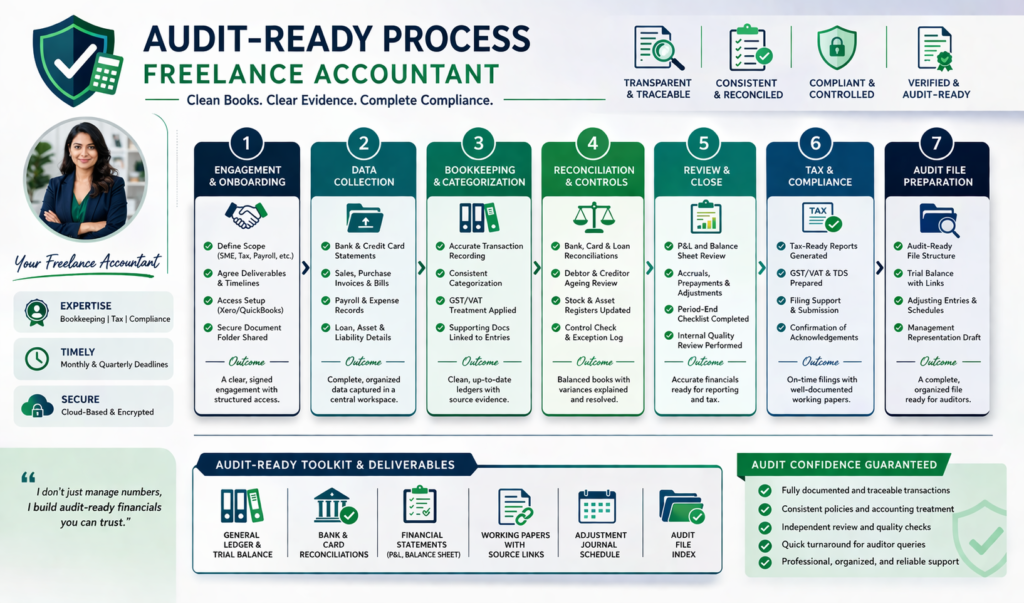
An audit-ready process freelance accountant trusts ensures that your records are organized, accurate, and compliant with IRS requirements. With this approach, you can work confidently, knowing your books are prepared for any scrutiny.
Many freelance accountants face common pitfalls. Inconsistent bookkeeping, missing receipts, and poorly tracked expenses can lead to errors that invite audits. A structured audit-ready system removes this stress and saves time, allowing you to focus on growing your business. At Next Source AI, we specialize in creating tools that simplify compliance for freelance professionals, helping you automate records and maintain transparent financial practices.
Why Freelancers Need an Audit-Ready Process
Freelancers often juggle multiple clients, income streams, and business expenses. Unlike traditional employees, you don’t have a single W-2 form to summarize income, making accurate record-keeping essential.
Consider Jenna, a freelance graphic designer. She managed her invoices manually and stored receipts in scattered email folders. When the IRS requested documentation for a year-end audit, she spent weeks tracking down transactions, causing unnecessary stress and penalties.
By establishing an audit-ready process freelance accountant follows, freelancers like Jenna can maintain organized, verifiable records throughout the year. This system includes real-time transaction tracking, automated expense categorization, and timely reconciliation of accounts.
Key Elements of an Audit-Ready Process
A comprehensive audit-ready process freelance accountant uses is built around four critical pillars: accuracy, consistency, documentation, and automation.
Accuracy
Every transaction must be accurately recorded. Mistakes in income reporting or expense categorization can trigger IRS attention. Automation tools reduce human error by syncing invoices, bank accounts, and receipts.
Consistency
Your accounting methods should remain consistent throughout the year. Using the same bookkeeping framework for all transactions allows for straightforward reconciliation and audit verification.
Documentation
Maintaining clear, organized documentation is essential. Receipts, invoices, and contracts must be easily accessible. Digital storage systems streamline retrieval and reduce the risk of lost paperwork.
Automation
Tools like Next Source AI enable real-time updates, automated categorization, and tax compliance tracking. Automation ensures you never miss deadlines or fail to document critical transactions.
For instance, Tom, a freelance consultant with clients across several states, integrated automation to manage multiple income streams. His system categorized expenses, logged invoices, and generated reports that were instantly audit-ready, saving hours of manual work.
Common Challenges Freelancers Face
Even with a strong framework, freelancers encounter challenges that compromise audit readiness.
Untracked Expenses
Freelancers often pay for tools, software, and travel without recording them systematically. Untracked expenses can result in lost deductions or IRS questions.
Delayed Bookkeeping
Waiting until the end of the year to organize transactions increases errors. Regular, automated updates prevent discrepancies from accumulating.
Multiple Income Sources
Freelancers frequently juggle payments from different clients, states, or currencies. Without automation, reconciling these sources becomes complex and error-prone.
Steps to Implement an Audit-Ready Process
You can create an audit-ready process freelance accountant relies on by following these actionable steps:
1. Centralize Financial Records
Integrate all bank accounts, invoices, and receipts into a single system. Digital platforms help categorize and store transactions securely.
2. Automate Expense Tracking
Use automated tools to capture expenses in real-time. This ensures accurate reporting and reduces manual errors.
3. Reconcile Accounts Regularly
Perform monthly reconciliations to identify discrepancies early. Regular checks prevent mistakes from accumulating into audit risks.
4. Maintain Documentation
Digitize all receipts and invoices. Organize them by category and date to simplify retrieval during audits.
5. Generate Audit Reports
Regularly create reports showing income, NextSourseAI ,expenses, and tax obligations. These reports provide transparency and demonstrate compliance.
6. Stay Updated on Tax Laws
Freelancers must follow federal and state tax changes. Automated systems can incorporate regulatory updates, keeping you compliant effortlessly.
Consider Lisa, a freelance writer working across multiple states. By implementing an automated system with Next Source AI, she consolidated her records, generated monthly audit reports, and maintained accurate tax filings. When a state audit occurred, she provided immediate documentation and avoided penalties.
Tools and Technologies That Help
Automation and AI have revolutionized the way freelancers manage taxes. Using technology, you can achieve an audit-ready process freelance accountant trusts.
Cloud Accounting Software
Platforms like QuickBooks Online and Xero integrate with automation tools, allowing seamless transaction tracking.
AI-Powered Expense Categorization
AI identifies and categorizes transactions automatically, reducing errors and saving time.
Real-Time Tax Calculation
Freelancers can calculate quarterly tax obligations instantly, ensuring accurate payments and avoiding underpayment penalties.
Integrated Dashboards
Dashboards provide a holistic view of income, expenses, and tax liabilities, making your records audit-ready at any moment.
By combining these technologies, freelancers can confidently maintain compliant financial records without excessive manual effort.
Benefits of an Audit-Ready Process
Implementing an audit-ready process freelance accountant depends on brings multiple advantages:
Reduced Stress During Tax Season
No more scrambling for missing receipts or reconciling scattered invoices. Automation keeps everything organized.
Lower Risk of Penalties
Accurate, consistent records reduce the likelihood of errors and IRS penalties.
Time Savings
Automation handles repetitive tasks like expense tracking, reconciliation, and report generation.
Partnering with Next Source AI
At Next Source AI, we provide freelance accountants with automated solutions that simplify compliance. Our platform integrates seamlessly with your accounting software, offering real-time updates, automated categorization, and audit-ready reporting.
Whether you’re a single freelancer or managing multiple clients, our tools ensure your financial operations are transparent, compliant, and easily verifiable. By partnering with Next Source AI, you can focus on delivering your services while trusting your tax records are fully prepared for audits.
Summary
Freelancers face unique accounting challenges, from multiple income streams to varying state tax laws. Implementing an audit-ready process freelance accountant trusts ensures compliance, reduces risk, and saves valuable time.
With freelance accountant compliance and US freelance tax automation, you can maintain organized records, track expenses accurately, and confidently respond to any audit request. Automation is not just convenience—it’s a safeguard for your freelance business.
Call to action
For expert help with your taxes, contact Next Source AI today at hello@nextsourceai.com or call 0313 500 0996.
FAQs
Using AI-powered accounting platforms, freelancers can track expenses, reconcile accounts, generate reports, and stay updated on tax laws automatically.
It’s a structured system that organizes all financial transactions, ensures accurate record-keeping, and prepares documents for potential audits.
Organized receipts, invoices, and contracts provide verifiable proof of income and expenses, reducing audit risks and supporting accurate filings.
Yes. Accurate, consistent, and well-documented records help freelancers file correctly, avoid mistakes, and stay compliant with IRS and state rules.
Absolutely. Reputable platforms, including Next Source AI, use encryption and secure cloud storage to protect your sensitive financial information.

