


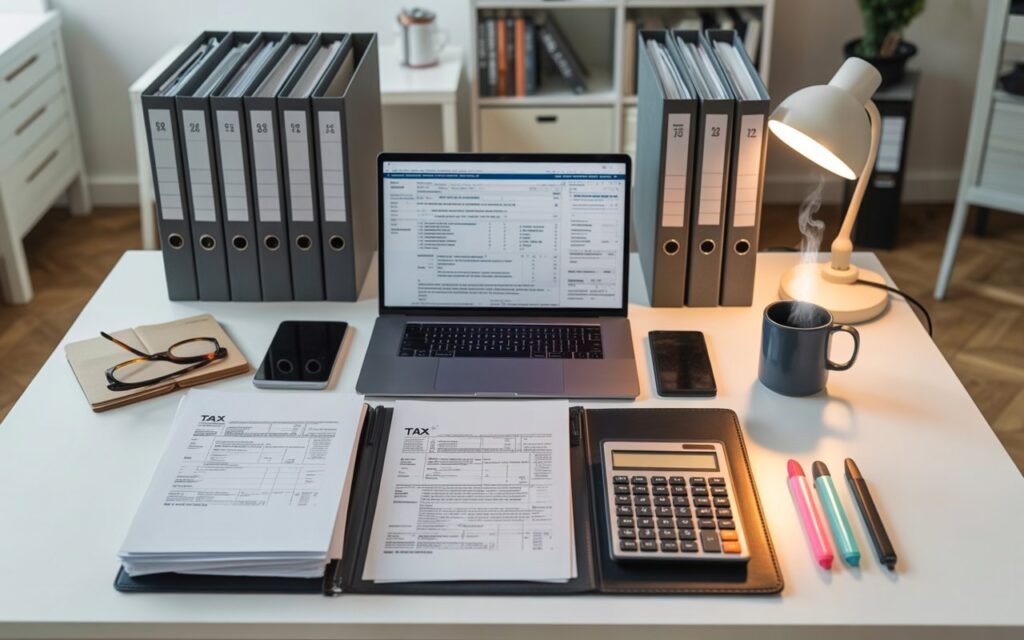
Managing taxes as a freelance accountant is both your expertise and your biggest challenge.
Between client work, complex compliance rules, and endless reporting, efficiency can make or break your business. That’s why using the right tax tools for freelance accountants is essential.
The right software suite doesn’t just save time — it enhances accuracy, streamlines reporting, and builds client confidence. Whether you’re a solo practitioner handling multiple clients or a small accounting firm scaling your operations, technology is your greatest ally.
At NextSourceAI, we help accountants harness automation, AI-driven analytics, and cloud-based tools to simplify tax management and scale smarter. Let’s explore which tax tools for freelance accountants are truly worth your investment and how they can transform your workflow.
Why Tax Tools Matter More Than Ever
Tax deadlines are relentless, and mistakes can lead to costly penalties or reputational damage. Freelance accountants often juggle dozens of clients, each with unique tax requirements. Manual spreadsheets and paper files no longer cut it — especially when clients expect faster turnaround and digital accessibility.
Consider Ahmed, a freelance accountant managing ten small business clients. He spent hours reconciling invoices and calculating VAT manually every month. When he adopted a tax automation tool, his monthly workload dropped by 40%. More importantly, he reduced filing errors, and his clients trusted him more.
Technology is not just about convenience — it’s about maintaining professional credibility in a competitive market.
Common Challenges Freelance Accountants Face
Freelance accountants share similar pain points, regardless of geography or client size:
1. Time drain from repetitive tasks:
Manually entering expenses, reconciling transactions, and generating tax summaries consume valuable hours that could be spent on advisory services.
2. Lack of integrated systems:
Many freelancers use separate tools for invoicing, bookkeeping, and tax calculations. Without integration, errors multiply.
3. Difficulty tracking compliance:
Each client may follow a different fiscal calendar or operate under varying tax laws. A centralised dashboard helps ensure nothing slips through.
4. Limited scalability:
Without automation, taking on new clients means longer nights and burnout. Smart tax tools enable you to grow without sacrificing accuracy.
This is where tax tools for freelance accountants bridge the gap — turning chaos into clarity.
Must-Have Tax Tools for Freelance Accountants
Cloud-Based Accounting Software
Every freelance accountant should start here. Platforms like QuickBooks, Xero, or Wave let you manage clients’ books, NextSouseAI ,track expenses, and generate tax-ready reports — all in one place.
Cloud systems eliminate the risk of lost data and let you collaborate with clients in real time. They integrate seamlessly with banks, expense trackers, and invoicing systems.
For example, a Pakistani accountant using Xero can link bank feeds directly from HBL or Meezan Bank, ensuring every transaction updates automatically. The result? Less manual entry and more time for value-added tasks.
Cloud tools are also the backbone of scalability. Whether you handle five or fifty clients, the system grows with you.
AI-Powered Analytics Platforms
Artificial Intelligence is transforming the accounting industry. Modern AI-driven platforms analyse data patterns to predict tax liabilities, detect errors, and even recommend tax-saving strategies.
For example, NextSourceAI helps accountants leverage predictive analytics to estimate quarterly payments and forecast client cash flow. Imagine receiving a dashboard alert that says, “Client A’s income spike may affect next quarter’s tax bracket.” That’s proactive accounting.
Integrating AI tools ensures you stay one step ahead — reducing audit risk while showcasing expertise.
Secure Document Management Systems
Freelancers handle sensitive financial documents. Without proper encryption and access control, you risk data breaches and regulatory non-compliance.
Using tools like Google Workspace with enhanced security, DocuSign for digital signatures, NextSouseAI or dedicated encrypted storage ensures clients’ records remain protected. Some tax tools for freelance accountants also integrate built-in document vaults that tag files automatically by client or tax year.
Security builds client trust — and in this business, trust is your currency.
Expense and Receipt Tracking Apps
One of the most underrated tools for freelancers is an automated expense tracker. Apps like Expensify, Shoeboxed, NextSouseAI or QuickBooks Self-Employed let you photograph receipts and categorise them instantly.
For example, Sarah, a UK-based freelance accountant, used to spend entire weekends reconciling client receipts. After adopting an expense tracker, she simply scanned receipts daily. The system synced with her tax software, saving her eight hours per week.
Integrating an expense tracker with your accounting software for freelancers eliminates data duplication and ensures every deductible item is captured.
Time-Tracking and Billing Tools
Freelance accountants often bill by the hour or per project. Tools like TMetric or Harvest help you track time per client and generate accurate invoices.
These systems also integrate with tax software, automatically categorising income streams and simplifying quarterly filing. When combined with tax automation tools, they eliminate underbilling and streamline revenue tracking.
How to Choose the Right Tax Tools for Your Practice
When selecting your toolkit, consider:
1. Compatibility and Integration
Ensure your tools sync with each other — for instance, your invoicing app should connect to your tax and accounting software. Disconnected systems waste time.
2. Data Security
Choose apps with two-factor authentication, encryption, and GDPR-compliance. Freelance accountants often manage private financial data — don’t compromise security.
3. Scalability
Select software that can handle growth. As your client base expands, your system should support multi-client dashboards and increased data loads.
4. Regional Support
If you operate in specific markets (like Pakistan or the UK), ensure the software includes relevant tax forms, currency options, and compliance rules.
At NextSourceAI, we guide freelance accountants in selecting tailored digital stacks that align with their workflow, client load, and regional compliance needs.
Real-World Transformation Example
Rizwan, a freelance accountant in Lahore, managed 15 small business clients manually using Excel and WhatsApp updates. Late nights and missed tax reminders became common.
After implementing cloud-based accounting, an AI expense tracker, and a deadline automation tool, his turnaround time improved by 60%. He gained five new clients without extra staff.
Summary & Call to Action
Success as a freelance accountant depends on more than tax knowledge — it’s about the smart use of technology. The right tax tools for freelance accountants simplify compliance, boost productivity, and build client confidence.
At NextSourceAI, we specialise in helping accountants automate tax workflows, select the best software stack, and leverage AI for smarter financial insights.
For expert help with your taxes, contact NextSourceAI today at hello@nextsourceai.com or call 0313 500 0996.
FAQs
Top-rated tools include QuickBooks, Xero, TaxDome, and Zoho Books. They combine bookkeeping, tax filing, and automation in one cloud platform for maximum efficiency.
They automate repetitive tasks like expense categorisation, deadline reminders, and tax calculations — saving time, reducing errors, and ensuring compliance with regional tax laws.
Yes, reputable cloud platforms use encryption, secure logins, and multi-factor authentication to protect sensitive data. Always choose tools with GDPR or SOC 2 compliance.
Absolutely. AI-powered analytics detect inconsistencies, forecast liabilities, and identify deductions you might overlook manually. They help you make smarter, data-driven tax decisions.
It depends on your workflow. Some all-in-one solutions handle invoicing, bookkeeping, and tax filing. However, integrating specialised tools often delivers more flexibility and accuracy.
