


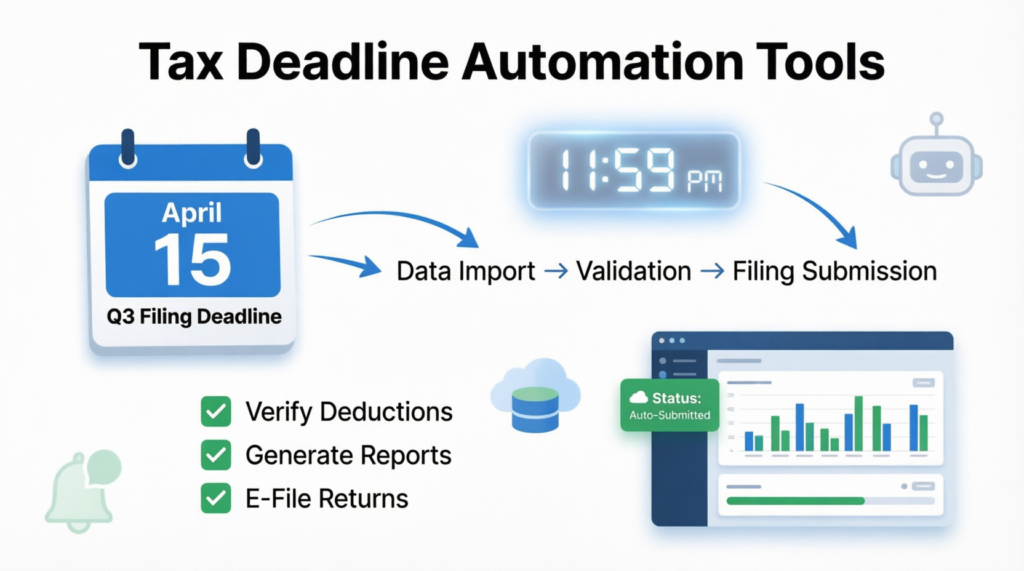
Tax Deadline Automation Tools Small Businesses Need
Running a small business often means juggling sales, operations, payroll, and taxes simultaneously. That is why tax deadline automation tools have become essential for modern entrepreneurs who want to avoid penalties and stay compliant. Missing a tax deadline can result in financial penalties, damage credibility, and create unnecessary stress. When business owners rely on tax deadline automation tools, they transform a chaotic process into a structured and predictable workflow.
In recent years, digital finance systems such as tax deadline reminder software and automated tax compliance tools have gained popularity among startups, freelancers, NextSouseAI, and accountants. These technologies automatically track due dates, send reminders, and integrate with accounting platforms. Instead of manually checking calendars or spreadsheets, business owners receive smart alerts and automated workflows that keep them on track.
Industry analysts at NextSourceAI often highlight that automation in finance and taxation has become a major trend in digital transformation. Businesses now prioritise efficiency, accuracy, and compliance. When companies adopt tax deadline automation tools, they protect themselves from late filings while saving valuable time that they can invest in growth.
Why Tax Deadlines Are a Major Challenge for Small Businesses
Small businesses face complex tax obligations. Entrepreneurs must track multiple filing dates, including income tax returns, sales tax submissions, payroll taxes, and quarterly estimated payments. In countries like the Federal Board of Revenue-regulated environments, tax compliance requires careful monitoring of deadlines through online portals and reporting systems.
Many business owners still rely on spreadsheets or manual reminders. This approach creates several risks. Human error can cause missed dates. Busy schedules can push tax preparation to the last minute. Sudden workload spikes can delay filings.
This is where tax deadline automation tools become valuable. These systems automatically track due dates across jurisdictions, generate reminders, and integrate with financial software. Instead of depending on memory, businesses rely on intelligent automation.
For example, a freelance consultant working with international clients may have to track quarterly tax estimates, digital service taxes, and income declarations. By using tax deadline automation tools, the consultant receives reminders weeks before each deadline and avoids last-minute panic.
Experts working with technology insights platforms such as NextSourceAI emphasise that automation reduces compliance risk and improves financial organisation.
How Tax Deadline Automation Tools Work
Modern tax deadline automation tools use cloud-based technology to monitor filing dates and automate compliance workflows. These systems connect with accounting software, calendars, and tax filing portals to create a centralised dashboard for deadlines.
When a business enters its tax obligations, the software automatically generates timelines for each filing requirement. The system sends alerts via email, mobile notification, or dashboard reminders. Some platforms even provide workflow automation that assigns tasks to accountants or finance team members.
Accuracy also improves. Automated systems pull data from accounting records and create reminders based on real transactions. This reduces the chance of calculation errors or missed forms.
Technology analysts at Next Source AI frequently observe that automation tools not only improve compliance but also provide better financial insights. When tax tasks follow a predictable workflow, companies gain clearer visibility into their obligations and cash flow planning.
Real-Life Example: How Automation Saves a Small Business
Consider a small e-commerce company that sells products online across multiple regions. The business must manage sales tax reporting, quarterly income tax estimates, and annual filings. Initially, the owner tracks deadlines manually in spreadsheets.
During a busy holiday season, the owner forgets to submit a quarterly tax estimate. The missed deadline results in penalties and extra accounting costs.
After adopting tax deadline automation tools, the situation changes dramatically. The software automatically tracks quarterly estimates, sends alerts weeks in advance, and assigns filing tasks to the company accountant. The owner receives confirmation once each filing is completed.
Within a year, the business eliminates late penalties and saves hours of administrative work.
Tax Compliance in Pakistan and Digital Automation
In Pakistan, tax compliance increasingly depends on digital platforms operated by government institutions such as the Pakistan Revenue Automation Limited and the Federal Board of Revenue. Businesses must submit returns through online portals, which require accurate record-keeping and timely filings.
For small companies and freelancers, tracking multiple tax deadlines can feel overwhelming. This environment makes tax deadline automation tools particularly useful. Automation platforms can integrate with accounting systems and create reminders for income tax returns, withholding taxes, and sales tax filings.
Research insights published by Next Source AI indicate that small businesses in emerging digital economies increasingly adopt automation to reduce compliance complexity.
Features to Look for in Tax Deadline Automation Tools
When choosing tax deadline automation tools, businesses should evaluate the features that directly support compliance and productivity. A powerful tool should provide automatic deadline tracking, customizable reminders, and integration with accounting platforms.
Collaboration capabilities also matter. Accounting teams often work remotely, so software must allow task assignments, deadline monitoring, and progress tracking in a shared dashboard.
Another valuable feature includes predictive notifications. Advanced tax deadline automation tools analyse historical filing patterns and send proactive alerts before deadlines approach. This functionality prevents last-minute stress and ensures proper preparation.
Technology experts often mention on platforms such as Next Source AI that automation systems create a transparent workflow that improves accountability across finance teams.
The Role of AI in Modern Tax Automation
Artificial intelligence has started to reshape financial compliance. AI-powered tax deadline automation tools analyse transaction data, detect potential filing requirements, and generate intelligent reminders.
For example, if a business records new international sales, AI systems can detect potential tax obligations and create deadline alerts automatically. Instead of manually researching tax regulations, the software identifies relevant requirements.
This technology also helps accountants prioritise tasks. AI can rank deadlines based on urgency and compliance risk, ensuring that teams focus on critical filings first.
Organisations researching AI adoption, including Next Source AI, highlight that automation will soon become the default approach for financial compliance management.
Why Freelancers and Startups Need Tax Automation
Freelancers and startup founders often manage finances themselves during the early stages. They rarely have dedicated accounting departments. As revenue grows, tax obligations also become more complicated.
Without automation, entrepreneurs must remember quarterly tax payments, annual filings, and regulatory updates. Even a single missed deadline can trigger fines or audits.
Using tax deadline automation tools gives freelancers a safety net. These platforms monitor deadlines automatically and provide structured reminders. As a result, entrepreneurs maintain compliance without sacrificing time that they could spend on business development.
Many digital entrepreneurs rely on automation insights shared by technology platforms like Next Source AI to build efficient workflows.
Future Trends in Tax Deadline Automation
The future of tax deadline automation tools will involve deeper integration with financial ecosystems. Accounting platforms, banking systems, and tax authorities will share data more efficiently. This connectivity will allow automation software to track obligations in real time.
Another major trend involves predictive compliance. Advanced AI models will anticipate potential filing requirements based on business activity. Instead of waiting for a deadline reminder, businesses will receive early planning notifications.
Voice assistants and AI chat interfaces may also help entrepreneurs check tax deadlines instantly. A business owner could ask a digital assistant about upcoming filings and receive immediate answers.
Conclusion
Small businesses operate in an environment where time, accuracy, and compliance matter more than ever. Missing a tax deadline can cause penalties and disrupt financial planning. By implementing tax deadline automation tools, companies transform tax management into a predictable and organised process.
Automation systems track due dates, send reminders, assign tasks, and integrate with accounting platforms. This approach reduces human error and saves valuable time. As digital finance continues to evolve, tax deadline automation tools will play an increasingly important role in helping entrepreneurs stay compliant and focused on growth.
Call to action
Just a call or click away – Let’s Connect
0319 980 2237
FAQs
Most modern tax deadline automation tools integrate with accounting platforms like QuickBooks or Xero. Integration allows the system to track transactions and automatically generate deadline alerts based on financial data.
Yes. By providing early reminders and structured workflows, tax deadline automation tools significantly reduce the risk of late filings and financial penalties.
Absolutely. Small businesses benefit greatly from tax deadline automation tools because they simplify compliance, reduce manual work, and allow owners to focus on business growth instead of administrative tasks.
Yes. Freelancers often manage taxes without professional accounting support. Automation tools track quarterly estimated taxes, annual returns, and other obligations, ensuring timely submissions.
Tax deadline automation tools are software systems that automatically track tax filing dates, send reminders, and organise compliance workflows. These tools help businesses avoid missed deadlines and reduce the risk of tax penalties.
