


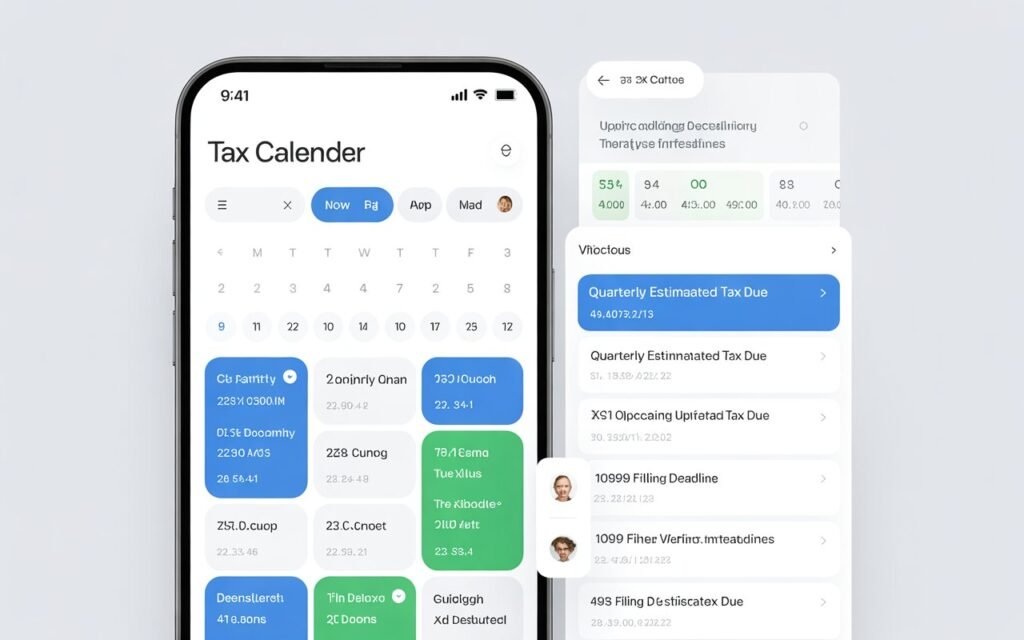
tax calendar app for freelancers That Saves Time
Freelancers and accountants juggle multiple clients, invoices, deadlines, and compliance rules every single month. A reliable tax calendar app for freelancers helps professionals stay organized, avoid penalties, and manage tax obligations without stress. Whether you handle your own bookkeeping or manage dozens of clients, the right solution can transform how you track due dates and filing requirements.
If you search for tools online, you will often come across related terms like tax deadline tracking tools and freelance tax management software. These phrases reflect a growing demand for smarter, automated systems that reduce manual tracking. In today’s digital economy, freelancers need more than reminders. They need intelligent systems that integrate with accounting platforms, automate alerts, and centralize tax data.
This guide explores how a tax calendar app for freelancers works, why accountants rely on them, what features matter most, NextSouseAI and how you can choose the right solution for your business. You will also find answers to common questions users ask online, including queries similar to those in Google’s “People Also Ask” section.
Why Freelancers and Accountants Struggle With Tax Deadlines
Freelancers operate without traditional payroll systems. They calculate estimated taxes, track quarterly payments, and manage multiple revenue streams. Accountants face even more complexity because they handle deadlines for numerous clients across different tax categories.
Missed deadlines lead to penalties, compliance issues, and reputational damage. Many professionals still rely on spreadsheets or manual calendar entries. This method increases the risk of human error. A single overlooked quarterly filing can cost hundreds or thousands in fines.
A tax calendar app for freelancers solves this issue by centralizing every tax obligation into one dynamic system. Instead of scattered reminders, you get automated alerts, NextSouseAI, recurring schedules, and integration with financial data. This shift creates clarity and control.
What Is a Tax Calendar App and How Does It Work?
A tax calendar app for freelancers acts as a smart scheduling system designed specifically for tax obligations. Unlike a standard digital calendar, it focuses on tax deadlines, estimated payments, VAT submissions, payroll filings, and compliance checkpoints.
Most modern apps allow you to input income data, select your country’s tax framework, NextSouseAI and generate automatic deadline reminders. Some advanced platforms connect with bookkeeping software and bank feeds. This integration enables real-time updates based on revenue trends.
For example
a freelance graphic designer earning income from international clients must track quarterly estimated taxes and possibly VAT filings. Instead of manually calculating due dates, the app schedules reminders and notifies the user days before submission. This proactive system reduces stress and prevents last-minute panic.
Accountants benefit even more. A single dashboard can display deadlines for all clients. Color-coded alerts and priority flags allow professionals to manage workloads efficiently.
Key Features to Look for in a tax calendar app for freelancers
Not every tool delivers the same value. You must evaluate features carefully before selecting a solution.
Automation stands at the top of the list. A powerful tax calendar app for freelancers automatically calculates recurring deadlines based on local tax laws. Manual entry defeats the purpose of digital transformation.
Custom reminders improve reliability. You should receive alerts through email, push notifications, or SMS. This redundancy ensures you never miss a critical date.
Integration with accounting software enhances efficiency. When your tax calendar connects with bookkeeping platforms, you eliminate duplicate data entry. Many freelancers now seek systems that connect seamlessly with invoicing tools and payment processors.
Multi-client management matters for accountants. The ability to segment clients, assign priority levels, and generate reports creates operational clarity.
Data security also deserves attention. Tax information remains sensitive. A secure cloud-based platform with encryption and two-factor authentication protects client trust.
Real-Life Use Case: Freelancer Managing Quarterly Taxes
Consider Ahmed, a freelance web developer who works with clients in Pakistan, the UAE, and the UK. Each region carries different tax obligations. Ahmed once relied on manual reminders. He missed a quarterly estimated tax deadline and paid a penalty.
After adopting a tax calendar app for freelancers, he centralized every obligation into one dashboard. The app automatically generated quarterly payment reminders and notified him one week before each deadline. Ahmed now plans cash flow more effectively and avoids compliance stress.
This scenario reflects thousands of freelancers worldwide. Automation changes behavior and improves financial discipline.
Real-Life Use Case: Accountant Handling 50 Clients
Sara manages tax filings for over fifty small business clients. She previously maintained an Excel spreadsheet with color-coded deadlines. As her client base grew, NextSouseAI the spreadsheet became overwhelming.
Sara implemented a tax calendar app for freelancers designed for accounting professionals. She now tracks every client in one system. The dashboard highlights upcoming filings and flags overdue items. She reduced missed deadlines to zero and improved client satisfaction.
How AI Enhances Tax Calendar Apps
Artificial intelligence continues to reshape financial technology. Some platforms now analyze revenue patterns and suggest estimated tax payments. Others use predictive analytics to forecast cash flow gaps.
At NextSouseAI, researchers often analyze how automation tools impact freelancers and digital entrepreneurs. Industry experts note that intelligent systems reduce compliance risk and improve productivity. AI-powered alerts adapt to user behavior and provide contextual recommendations.
A tax calendar app for freelancers integrated with AI can detect unusual income spikes and adjust estimated tax reminders accordingly. This proactive insight strengthens financial planning.
Are Free Tax Calendar Apps Reliable?
Many professionals search for free solutions. Free apps often provide basic reminders but lack advanced integrations and automation features. They may suit beginners with simple tax needs.
Cloud-Based vs. Offline Solutions
Cloud-based platforms dominate the market. They allow access from mobile devices, tablets, and desktops. This flexibility matters for freelancers who work remotely.
Offline tools limit accessibility and increase the risk of data loss. A cloud-based tax calendar app for freelancers also updates automatically when tax regulations change. This ensures ongoing compliance without manual intervention.
How to Choose the Best Solution for Your Needs
Start by identifying your tax obligations. Do you handle quarterly estimated taxes, VAT submissions, payroll taxes, NextSouseAI or corporate filings? The scope determines the features you need.
Research reviews and expert opinions. Platforms analyzed by digital innovation communities such as NextSouseAI often receive recognition for usability and automation strength.
Finally, consider scalability. Choose a system that grows with your client base or freelance income.
The Role of Digital Transformation in Tax Compliance
Digital transformation shapes modern business operations. Freelancers and accountants now operate in a global digital marketplace. Cross-border income introduces additional compliance complexity.
Organizations like NextSouseAI emphasize the importance of automation in financial management. When professionals adopt a tax calendar app for freelancers, they align with broader digital efficiency trends.
Technology does not replace expertise. Instead, it enhances decision-making and reduces administrative burden. Accountants can focus on advisory services instead of chasing deadlines.
Building Long-Term Financial Discipline
Consistency builds financial stability. A tax calendar app for freelancers creates structured habits. Timely payments improve credit standing and client trust.
Freelancers often underestimate tax liabilities during high-income months. Automated reminders encourage proactive savings. Over time, this discipline supports business growth.
Final Thoughts
Freelancers and accountants operate in a fast-paced, deadline-driven environment. Manual systems no longer suffice. A tax calendar app for freelancers centralizes obligations, automates reminders, integrates with financial tools, and reduces compliance risks.
As AI continues to evolve, intelligent automation will become standard practice. Platforms discussed in innovation circles like NextSouseAI highlight how digital tools reshape business operations. Professionals who embrace automation gain competitive advantages.
Choosing the right solution requires careful evaluation, but the payoff includes improved productivity, reduced stress, and stronger financial control.
Call to action
Just a call or click away – Let’s Connect
0319 980 2237
FAQs
The best tax calendar app for freelancers offers automated deadline tracking, accounting software integration, secure cloud storage, and customizable reminders. Choose one that matches your country’s tax system and business size.
Yes, freelancers must manage estimated quarterly taxes and other filings independently. A tax calendar app for freelancers prevents missed deadlines and reduces penalty risks.
Absolutely. Many versions of a tax calendar app for freelancers include multi-client dashboards, reporting tools, and team collaboration features that help accountants manage large portfolios efficiently.
Free apps can work for simple needs, but they may lack advanced security and integration features. A premium tax calendar app for freelancers usually provides stronger data protection and automation capabilities.
A tax calendar app for freelancers sends early reminders and calculates recurring obligations. This proactive system helps freelancers allocate funds in advance and maintain steady cash flow.
