

If you are a freelancer, small business owner or self-employed professional
managing your tax deadlines across months can become overwhelming.
That’s where a cloud tax deadline tracking platform steps in and transforms your workflow. At Next Source AI we guide you on adopting tools that automate your tax-deadline management instead of leaving you to manually monitor spreadsheets and calendar alerts. With the right system, you will reduce risk, stay compliant and free your time for productive work.
In this article, we’ll explain why tax deadlines trip up many people, the specific challenges you face without automation, how a cloud-based system changes the game, real-life examples of freelancers using such platforms, and actionable steps to select and implement your own cloud tax deadline tracking platform.
The pain of manual deadline tracking for taxes
When you rely on manual methods to track tax deadlines you lock yourself into reactive mode. You may have a spreadsheet listing “annual return due” or “quarterly payment” but you might miss a date because you failed to update the sheet, forgot to set a reminder, or overlooked a new regulation. Missing a deadline can trigger penalties, interest, or additional scrutiny from tax authorities.
For example, large firms now adopt enterprise tools to manage tax calendars globally because spreadsheets simply don’t scale. For freelancers, the same principle applies: you may not be managing dozens of clients, but you still face deadlines for returns, payments and registrations. If you miss a due date it could affect your “filer” status, lead to higher withholding or reduce your flexibility.
One real-life example:
A freelance graphic designer in Karachi signed a new overseas contract and delayed entering the income in her books. She forgot the estimated tax payment deadline for that foreign income, missed the date and had to pay both penalties and interest. She later switched to a cloud timeline tool that sent automatic alerts two months, one month and one week before each due date. That change saved her from the same mistake again.
Without a dedicated cloud tool, you rely entirely on your memory—or on manually updating multiple lists in different places—and that opens the door to human error and missed dates.
How a cloud tax deadline tracking platform solves these issues
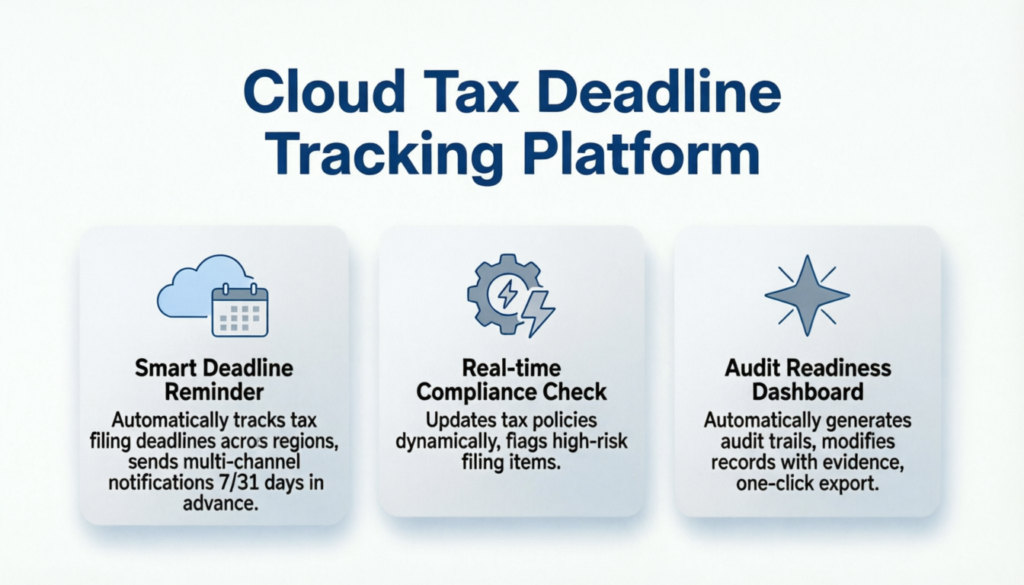
A cloud tax deadline tracking platform gives you a central system that stores all your tax deadlines—annual filings, quarterly payments, registration renewals—automatically. It ensures you receive reminders in advance rather than relying on memory or email flagging. It also often integrates with your accounting data so deadlines adjust if your income or situation changes.
For instance, the product described by ONESOURCE Tax Calendar provides a global-tax-deadline calendar that “automates tax due-dates for global direct tax, indirect tax, NextSouseAI, statutory reporting” and makes them accessible in the cloud. Similarly, the product from ComplyIQ offers a “tax operations manager” that tracks due dates, sends email alerts and recreates monthly work logs.
For you as a freelancer, the benefit is significant: you get automatic alerts and structured workflows instead of ad-hoc tracking. You can define the key deadlines you face (for example local income tax return, foreign income registration, quarterly instalments) and let the platform monitor and remind you. You reduce risk, you optimise your cash-flow and you build confidence.
Real-life example:
A solo digital marketer with clients abroad used a cloud-based deadline tool integrated with her Google Calendar. When she logged a new foreign payment she entered the estimated payment due date; the cloud platform created recurring reminders and escalated alerts. She noted that “I didn’t panic in April this year” because “I had the notification popping up in February”.
How you can choose and implement a cloud tax deadline tracking platform
Here’s how you can adopt a cloud tax deadline tracking platform step-by-step so you stay ahead of every key date rather than scrambling at the last minute.
1. Identify your key deadlines. List the tax deadlines you face:
annual returns, quarterly payments, NextSouseAI, registration renewals, foreign-income filings, VAT/GST if applicable. You may be in Pakistan, working internationally, or handling multiple jurisdictions. Document each date as a baseline.
2. Evaluate platforms. Check features:
Does the platform allow you to add custom deadlines? Does it send notifications via email, SMS or push alert? Does it integrate with your accounting or bookkeeping system so deadlines update if your status changes? For example, tools like ONESOURCE and ComplyIQ illustrate how automation and cloud access deliver real-time visibility.
3. Set it up and migrate your deadlines.
Once you choose a platform, enter your deadlines manually or import them if supported. Configure alert timings (for example 60 days, 30 days, 7 days). Link each deadline to the required action (file return, make payment, upload documents).
4. Integrate workflows. When a reminder triggers
you should know what to do. For instance, when the alert pops up, you review your income/expenses, set aside funds, and click “Mark as done” in the system. For a platform that offers workflow, you might attach tasks: “upload foreign income statement”, “pay estimated tax”.
5. Review monthly and adjust
At regular intervals (for example, at month-end), check the platform’s dashboard to see upcoming deadlines, confirm you have logs for each associated task and adjust if changes occur (for example, a new freelance income source adds a new filing).
Why a cloud tax deadline tracking platform matters in today’s world
Tax regimes continue to grow more complex. For freelancers and small business owners, the demands keep increasing: cross-border clients, remote work, foreign income, new registration rules, and digital filing systems. In this evolving environment relying on memory and spreadsheets becomes risky.
A cloud tax deadline tracking platform gives you scalable, accessible, always-on tracking. Because it lives in the cloud you can check deadlines on mobile, update tasks on the go, and collaborate with your team or advisor remotely. The platforms we referenced demonstrate how cloud-based systems serve organisations of all sizes—but they scale perfectly for freelancers too.
Another advantage: custom alerts ensure you feel in control. When a deadline triggers early you’re proactive, not reactive. You can set aside funds, NextSouseAI, ask your advisor a question, or schedule time to get your documents ready instead of flying blind. Over time you save money in penalties and accounting costs, and you gain peace of mind.
And for freelancers, that benefit becomes freedom: less time worrying about tax deadlines, more time doing your craft and growing your business. At Next Source AI we support freelancers by combining smart tools like deadline-tracking platforms with industry expertise. You don’t just get reminders—you get context, guidance, and confidence.
Summary & Call to Action
To wrap up: if you want to take control of your tax deadlines, a cloud tax deadline tracking platform offers a simple yet powerful solution. Identify your deadlines, choose a cloud platform that supports alerts and workflows, set it up, integrate your tasks, review regularly and collaborate with your advisor. You’ll replace stress with structure, risk with readiness, and confusion with clarity.
For expert help with your taxes, contact Next Source AI today at hello@nextsourceai.com or call 0313 500
FAQs
A cloud tax deadline tracking platform is an online system that lists your tax-related deadlines (filings, payments, registrations) and sends you automated reminders. You need one because, as a freelancer, you often manage multiple obligations, and this system helps you stay compliant, avoid penalties and keep your calendar in check.
You should review it monthly and especially when you complete a major task (payment done, return filed). Monthly reviews help you catch any upcoming deadlines early, adjust for changes in your business or income and update the status of tasks. That routine keeps the platform active and reliable.
You should review it monthly and especially when you complete a major task (payment done, return filed). Monthly reviews help you catch any upcoming deadlines early, adjust for changes in your business or income and update the status of tasks. That routine keeps the platform active and reliable.
No. The platform supports you by tracking and reminding. Your advisor still provides strategic tax guidance, ensures correct filings and handles complex issues. Think of the platform as your operations engine and your advisor as your specialist partner. At Next Source AI we combine both components for freelancers.
Yes—most reputable platforms use encryption, secure cloud infrastructure and audit logs. For example, enterprise systems highlight features like role-based access, secure storage, and real-time updates. Always check a system’s security credentials and compliance practices before adoption.
