


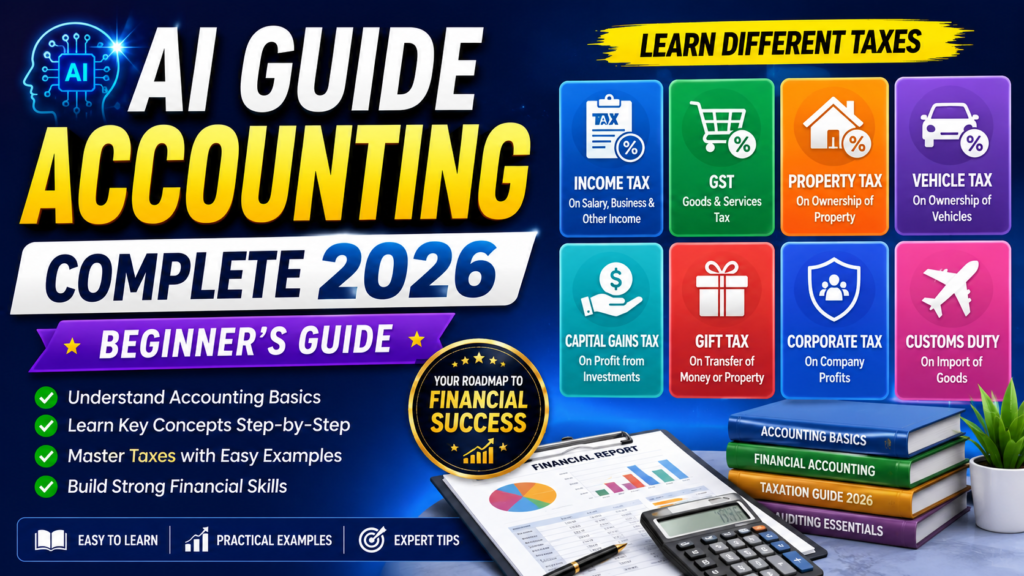
How many hours did your team spend last month manually entering invoices
reconciling bank statements, or chasing clients for missing receipts? For most UK accounting practices, the honest answer is: far too many. A ICAEW Digital Economy report (opens in new tab) found that UK accountants spend up to 40% of their working week on tasks that AI can now handle automatically. That is two full working days every week — per person — lost to admin.
That is precisely why the demand for a practical is surging in 2026. Whether you run a sole-practitioner practice in Leeds or a 30-partner firm in the City of London, artificial intelligence is no longer a future consideration. It is a present-day competitive advantage.
By the end of this guide, you will understand exactly which AI tools exist, how they integrate with HMRC’s Making Tax Digital requirements, what they cost, and the precise steps to implement them without disrupting your practice.
Why 2026 Is the Year Every UK Accounting Firm Needs an AI guide accounting
HMRC’s Making Tax Digital (MTD) programme is expanding to cover income tax self-assessment for all sole traders and landlords earning over £20,000 from April 2026 — adding millions of new compliance requirements to UK practices overnight. At the same time, NextSourceAI ,a PwC UK report on automation in professional services (opens in new tab) estimated that up to 46% of accounting tasks are susceptible to automation. Firms that deploy AI now build a structural cost advantage over those who delay. The early adopters in your sector are already winning on speed, margin, and client retention.
AI guide accounting — What It Means and Why It Matters
Definition: AI guide accounting is a practical framework that guides UK accounting practices through selecting, implementing, and optimising artificial intelligence tools to automate bookkeeping, tax compliance, financial reporting, and client communication. It helps accountants and practice managers by eliminating repetitive manual tasks, reducing error rates, and freeing capacity for high-value advisory work. In 2026, it matters because MTD expansion, rising client expectations, and fierce competition from tech-enabled challenger firms mean that manual processes are no longer commercially sustainable.
Core Benefits: What Following an AI guide accounting Delivers for Your Firm
1. Dramatic Reduction in Manual Data Entry
AI tools like Dext and Vic.ai use optical character recognition and machine learning to capture data from receipts, invoices, and bank feeds automatically. Reconciliation that once took an accounts assistant a full day can complete in minutes. According to Deloitte’s Finance Automation report (opens in new tab) (which benchmarks professional services automation broadly), NextSourceAI ,firms adopting intelligent document processing report 70–90% reductions in manual entry time within the first six months of deployment.
2. HMRC MTD Compliance Without Extra Headcount
A good equips your firm to handle the expanding MTD obligations automatically. Cloud platforms such as Xero and QuickBooks connect directly to HMRC’s APIs, submitting quarterly updates without manual intervention. This means your team handles ten times more MTD clients without hiring additional compliance staff — a critical margin advantage as the April 2026 expansion takes effect.
3. Faster, More Accurate Financial Reporting
AI-powered reporting tools pull live data from multiple sources — bank feeds, payroll, expenses — and generate management accounts, P&L summaries, and cash flow forecasts in real time. Clients receive up-to-date financial intelligence within hours of period end rather than weeks. This shift from retrospective to proactive reporting is the single biggest driver of client retention in 2026.
4. Reduced Error Rates and Improved Audit Readiness
Human error in manual accounting is well-documented. AI systems apply consistent rules to every transaction, flagging anomalies, duplicate entries, and VAT coding errors before they become compliance problems. Audit analytics tools like CaseWare AI can scan entire ledgers for risk indicators in seconds — work that previously required days of senior audit time.
5. Scalable Client Onboarding and Communication
AI-driven client portals and chatbots handle routine queries — “When is my tax return due?”, “Can I see my management accounts?” — without partner or manager involvement. Automated onboarding workflows collect client information, run AML checks, and issue engagement letters without a single manual email. For growing practices, this creates a scalable service model that does not require proportional headcount growth.
6. Enhanced Advisory and Tax Planning Capacity
When your team stops spending 40% of their week on manual data work, that capacity redirects to billable advisory services — tax planning, R&D claims, business valuations, and strategic financial counsel. Advisory services command three to five times the fee rates of compliance work. An ICAEW Future of Finance report (opens in new tab) found that practices generating more than 30% of revenue from advisory services are significantly more profitable and more resilient to fee pressure.
How to Follow an AI guide accounting — 6 Practical Steps
Audit your current processes. Map every recurring task your team performs — bookkeeping, VAT returns, payroll, client reporting — and estimate the hours spent on each. This becomes your AI opportunity matrix.
Prioritise by volume and repetition. The highest-ROI AI deployments target tasks that are high-volume, rule-based, and time-consuming. Invoice processing, bank reconciliation, and MTD submissions are universal starting points.
Select MTD-compatible cloud software. Ensure any platform you adopt connects to HMRC’s Making Tax Digital API. Xero, QuickBooks, and FreeAgent all carry full MTD for VAT and Income Tax compatibility.
Connect AI add-ons for document capture and analytics. Layer specialist tools — Dext for receipts, Vic.ai for AP automation, Silverfin for accounts preparation — on top of your core cloud platform.
Train your team and communicate with clients. Run a structured half-day training session for your team. Brief clients on any changes to document submission or reporting formats. Adoption is 80% change management and 20% technology.
Measure, optimise, and expand. Track hours saved, error rates, and client satisfaction scores at 30, 60, and 90 days. Use the data to identify the next automation opportunity and build a continuous improvement cycle.

Real-World Examples: AI guide
Example 1: Sheffield Practice Cuts Compliance Hours by 35%
A 12-partner general practice in Sheffield implemented Xero with Dext integration in early 2025. Within four months, bank reconciliation time dropped by 78% and VAT return preparation time fell by 35%. The firm redirected 120 monthly admin hours into a new business advisory service, generating an additional £8,400 per month in advisory fees within six months of launch.
Example 2: London Specialist Tax Firm Scales MTD Clients 3x
A boutique tax advisory in the City of London used QuickBooks AI and a custom client portal to triple its MTD client base from 120 to 360 self-assessment clients between January and April 2026, without hiring a single additional member of staff. The automated onboarding and quarterly update submission workflow ran in the background, allowing the two-partner firm to compete with practices twice their size.
Example 3: Manchester Audit Team Reduces Fieldwork by 40%
Following the principles of a structured , a Manchester audit firm deployed CaseWare AI to perform preliminary analytics on client data before fieldwork began. The system identified high-risk areas and anomalies automatically, allowing auditors to focus their time on genuine risk rather than mechanical sampling. Total audit fieldwork hours fell by 40% on pilot engagements.
Common Mistakes to Avoid When Following an AI guide accounting
Choosing software before mapping processes. Buying a tool before understanding your workflow is the fastest route to shelfware. Always audit first.
Ignoring MTD compatibility. Not all AI accounting tools connect to HMRC’s APIs. Verify MTD for Income Tax (MTD ITSA) compatibility before committing to any platform.
Skipping staff training. The most common reason AI adoption fails in accounting practices is not technology — it is culture. Budget proper training time and nominate an internal AI champion.
Automating broken processes. AI makes bad processes faster and more consistently wrong. Fix your workflows before you automate them.
Neglecting data quality. AI tools are only as good as the data they process. Dedicate time upfront to cleaning your client data, NextSourceAI ,chart of accounts, and document management.
Underestimating change management with clients. Some clients will resist digital document submission or automated portals. Communicate the benefits clearly and offer a supported transition period.
How Next Source AI Helps UK Accounting Firms Implement Their AI guide accounting
At Next Source AI, we work with UK accounting practices of all sizes — from sole practitioners to multi-office firms — to design and implement bespoke AI solutions that fit their exact workflows, HMRC obligations, and growth ambitions.
Our dedicated AI solutions for accounting firms cover everything from cloud platform migration and MTD readiness to custom client portals and automated reporting dashboards. For practices in growth mode, our AI for startups and early-stage businesses programme provides a fast-track implementation pathway with full compliance support.
We handle technology selection, integration, staff training, and ongoing optimisation — so you spend your time on client work, not configuration. Every solution we build is designed from the ground up for HMRC compliance and UK data protection standards.
Conclusion: Your AI guide accounting Starts Today
A practical is the single highest-leverage investment a UK accounting firm can make in 2026. It reduces cost, expands capacity, strengthens compliance, and unlocks the advisory revenue that drives long-term firm value.
Ready to build yours? Email the Next Source AI team at hello@nextsourceai.com or visit our AI solutions for accounting firms page to book a free, no-obligation AI audit. We will review your current workflows, identify your biggest automation opportunities, and outline a clear implementation roadmap — at no cost.
The accounting firms that invest in AI today will define the profession tomorrow.
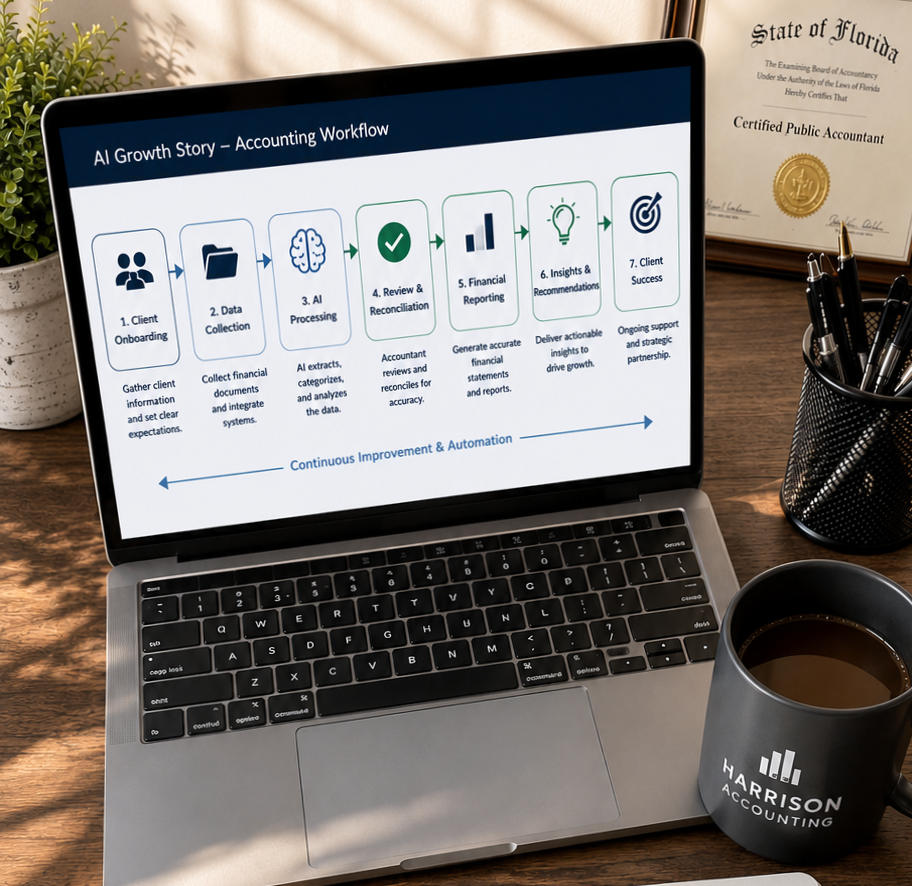
FAQs
An AI guide for accounting is a structured framework that helps UK accountants and practice managers understand, VAT filing, and client reporting. It is designed for anyone in an accounting practice — from partners evaluating strategy to junior staff implementing new software — who wants to adopt AI confidently and compliantly.
Yes, when implemented correctly. HMRC’s Making Tax Digital programme is explicitly designed for digital and AI-assisted submission. Data protection compliance requires that any AI tool processing client financial data has appropriate data processing agreements, and role-based access controls. Always verify these with your vendor before deployment.
Cloud accounting platforms like Xero start from around £15–£40 per client per month at scale. A complete AI stack for a small practice of 1–5 accountants typically costs £300–£800 per month in software, with most firms achieving ROI within two to three months through time savings alone.
No — at least not in the way most people fear. AI will automate repetitive, rule-based tasks: data entry, reconciliation, and standard compliance work. Accountants who adopt AI become more valuable; those who ignore it risk being undercut by practices that do.
For most small UK practices, Xero combined with Dext for document capture and Silverfin for accounts preparation forms a strong, MTD-compliant AI stack. The right choice depends on your client profile, and workflow — a proper technology assessment is always worth doing before committing.
