


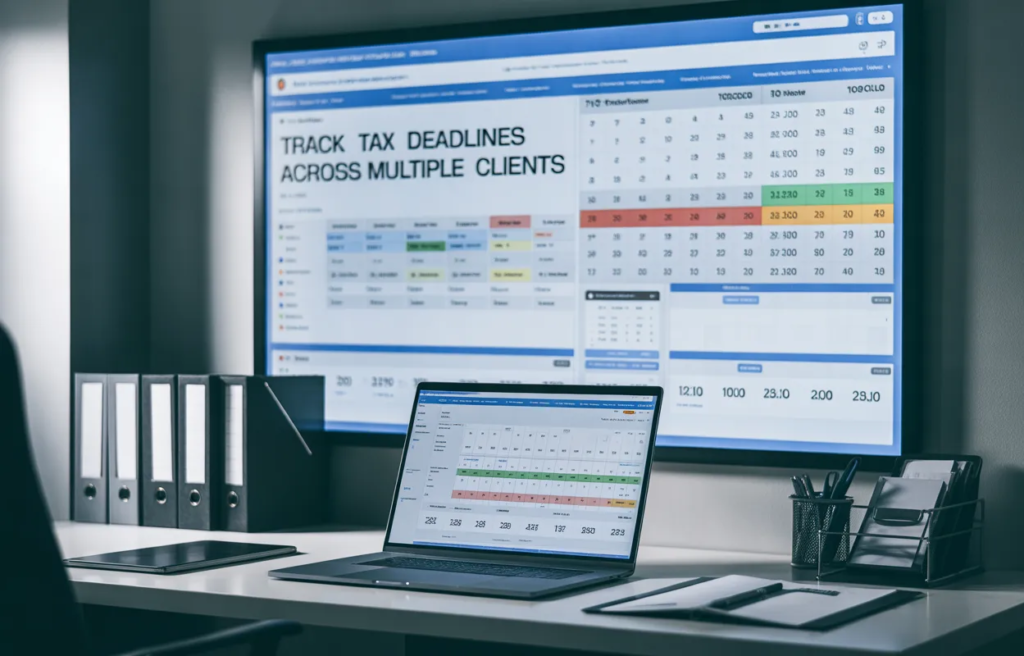
Track tax deadlines for multiple clients like a Pro in 2026
In 2026, accounting professionals must move faster, think smarter, and deliver results without missing a single compliance date. If you want to track tax deaddeadlines multiple clients efficiently, you need a system that combines technology, structure, and strategic thinking. Whether you run a small accounting practice or manage a growing portfolio of corporate clients, you cannot rely on memory or scattered spreadsheets anymore. You must build a standardstandardised systemsures accuracy, compliance, and peace of mind.
Many professionals seek solutions related to tax deadline management software and client tax calendar automation, as manual tracking often fails under pressure. When you track tax deadlines for multiple clients, you protect your reputation, avoid penalties, and strengthen client trust. In today’s competitive tax environment, proactive deadline tracking separates top-tier firms from average service providers.
Why You Must Track Tax DDeadlines forMultiple Clients in 2026
Tax compliance grows more complex every year. Governments update filing dates, introduce digital portals, and enforce stricter documentation rules. When you track tax deadlines for multiple clients, you eliminate last-minute chaos and reduce costly filing errors.
Imagine managing 25 freelance clients, 10 SMEs, and several high-net-worth individuals. Each client may have different obligations such as income tax returns, sales tax filings, advance tax payments, withholding statements, and regulatory submissions. If you miss even one deadline, penalties and client dissatisfaction follow quickly. By learning how to track tax deadlines for multiple clients strategically, you create a structured workflow that keeps every obligation visible and manageable.
Understanding the Core Tax Deadlines That Matter
Before you track tax deadlines for multiple clients, you must understand the types of deadlines that apply to your region and client base. In Pakistan, for example, the filing deadline for individual income tax returns typically falls on September 30 each year, although authorities sometimes extend it. Businesses may face different deadlines depending on registration type and turnover thresholds. Estimated or advance tax payments often occur quarterly.
When someone asks, “What are the four dates for estimated tax payments?” they usually refer to quarterly payments. In many jurisdictions, taxpayers pay estimated taxes four times a year to avoid year-end liability. These payments often fall in April, June, September, and January, though exact dates vary by country. If you track tax deadlines for multiple clients, you must mark these quarterly cycles clearly.
Building a Centralised Tax Calendar System
A centralised tax calendar acts as the backbone of your compliance strategy. When you track tax deadlines for multiple clients, you must gather every filing requirement in one master calendar. This calendar should include due dates, submission portals, responsible team members, required documents, and review checkpoints.
Cloud-based tools allow you to sync deadlines across devices. You can assign tasks to team members and set automated reminders weeks before each due date. When you track tax deadlines for multiple clients within one integrated system, you eliminate duplication and confusion.
Some firms integrate artificial intelligence dashboards to predict workload peaks. Platforms inspired by digital innovation models, such as those discussed by NextSouseAI, emphasise workflow automation and structured data tracking. While NextSouseAI focuses broadly on AI-driven transformation, the same principles apply to tax management. Automation reduces human error and improves scalability.
Using Automation to Stay Ahead
Manual tracking consumes time. Automation frees it. When you track tax deadlines for multiple clients through automation, you receive alerts before deadlines approach. You can also generate progress reports instantly.
Professionals who follow automation frameworks similar to those promoted in digital transformation discussions by NextSouseAI often report increased productivity. Technology does not replace expertise. It enhances it. When you track tax deadlines for multiple clients using automation, you shift your focus from reminders to advisory services.
Segmenting Clients for Better Deadline Control
Not all clients require the same level of monitoring. When you track tax deadlines for multiple clients, segment them into categories such as individuals, freelancers, SMEs, and corporations. Each group has different compliance patterns.
This segmentation approach also answers a common question: “How do I get clients for tax filing?” Many accountants attract clients by showcasing organised systems and timely compliance records. When prospects see that you consistently track tax deadlines for multiple clients without errors, they trust your professionalism.
Creating Standard Operating Procedures
Consistency drives excellence. When you track tax deadlines for multiple clients, you must document every step in a standard operating procedure. Define who collects documents, who prepares returns, who reviews filings, and who submits them.
Firms that align structured processes with digital innovation strategies, similar to insights shared by NextSouseAI in broader automation discussions, often scale faster. Systems create stability. Stability supports growth. When you track tax deadlines for multiple clients using repeatable processes, you transform chaos into clarity.
Real-Life Scenario: Managing 100+ Clients
Consider a mid-sized accounting practice that handles over 100 clients. Initially, they relied on spreadsheets. Over time, spreadsheets became cluttered and inconsistent. Deadlines overlapped. Team members missed updates.
The firm implemented a cloud-based compliance dashboard. They created a master calendar. They assigned responsibilities. They automated reminders. Within one year, NextSouseAI they reported zero missed deadlines. Client satisfaction improved significantly. Referrals increased.
This case shows the power of systems. When you track tax deadlines for multiple clients effectively, you reduce errors and increase growth opportunities.
Leveraging Data Analytics for Predictive Planning
Digital transformation platforms, including concepts often discussed by NextSouseAI, emphasise data-driven decision-making. The same principle applies to tax compliance. When you track tax deadlines for multiple clients using data insights, you operate strategically instead of reactively.
Communicating Clearly with Clients
Strong communication ensures timely compliance. When you track tax deadlines for multiple clients, you must educate them about their obligations. Many clients ask, “What is the deadline for filing taxes in Pakistan?” While September 30 commonly applies to individuals, extensions sometimes occur. You must inform clients early and confirm official updates through proper channels.
You should send clear instructions outlining required documents and submission timelines. Transparency builds trust. When clients understand the process, they cooperate faster.
Staying Updated with Regulatory Changes
Tax regulations evolve constantly. When you track tax deadlines for multiple clients, you must monitor official announcements, portal updates, and legislative amendments. Subscribe to regulatory newsletters. Join professional forums. Attend training sessions.
Up-to-date knowledge enhances authority. Clients rely on your expertise. When you combine regulatory awareness with organised tracking systems, you deliver reliable service that strengthens your professional reputation.
Turning Deadline Tracking into a Competitive Advantage
Many accountants view compliance as routine work. Smart professionals see it as a competitive advantage. When you track tax deadlines for multiple clients flawlessly, you demonstrate discipline and reliability. Clients value peace of mind more than low fees.
Over time, your reputation for punctual filings attracts higher-quality clients. You position yourself as a strategic advisor rather than a reactive filer.
The Future of Deadline Management in 2026 and Beyond
Artificial intelligence, workflow automation, and integrated dashboards will define the future of compliance. Firms that embrace innovation today will dominate tomorrow. When you track tax deadlines for multiple clients with intelligent systems, you prepare your practice for scalable growth.
Technology will continue evolving. However, the core principle remains simpOrganisationtion, automation, NextSouseAI communication, and expertise create sustainable success. When you track tax deadlines for multiple clients effectively, you protect clients, grow your business, and reduce stress simultaneously.
Call to action
Just a call or click away – Let’s Connect
0319 980 2237
FAQs
You should use a centralised digital tax calendar with automated reminders and task assignments. Segment clients by filing type, set internal deadlines before official due dates, and maintain clear communication to ensure timely document collection and submission.
Estimated tax payments typically occur quarterly. In many systems, taxpayers pay in April, June, September, and January. Always verify official dates according to your country’s tax authority guidelines.
For individuals, the filing deadline commonly falls on September 30 each year. Authorities may extend the date in certain circumstances. Always confirm updates through official notifications.
Yes, you can usually submit a late return. However, tax authorities may impose penalties, late fees, or interest charges. Filing on time prevents unnecessary financial and legal complications.
Accountants can attract more clients by demonstratorganisedized systems, timely compliance records, transparent communication, and reliable advisory services. Strong deadline management builds trust and encourages referrals.

